
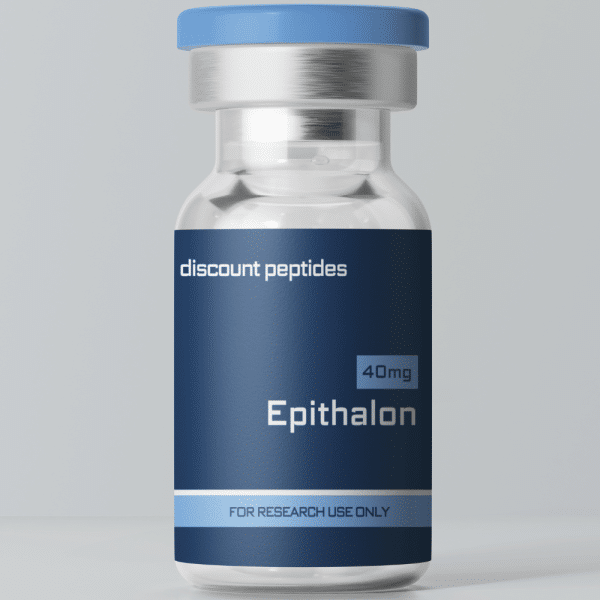


Epithalon Epitalon (40mg)
$101.00
RESEARCH USE ONLY
Out of stock
Description
Epitalon (Epithalon) is a synthetic peptide consisting of four amino acids: Ala-Glu-Asp-Gly (AEDG). It has attracted considerable interest in peptide research focused on aging biology, cellular regulation, pineal function, melatonin signaling, oxidative stress, and telomere biology.
Unlike larger peptide hormones, Epitalon is an exceptionally short tetrapeptide, yet laboratory research has identified several biological pathways potentially influenced by its activity.
Product Information
Epitalon was developed from research into peptides associated with the pineal gland. Studies have investigated its effects on gene expression, chromatin organization, melatonin synthesis, cellular proliferation, and other biological processes associated with aging.
More recent laboratory research has also examined Epitalon’s effects on telomerase activity and telomere length in human cell lines, adding another area of interest to the growing body of Epitalon research.
How Does Epitalon Work?
Epitalon’s exact mechanism is still being investigated. Research suggests that it can influence gene expression, chromatin regulation, pineal/melatonin pathways, and cellular processes associated with aging.
Epitalon Benefits
Supports Research Into Aging Biology:
Epitalon has been investigated extensively in cellular and animal models of aging. Research has examined its effects on biological processes associated with cellular aging, including gene regulation, oxidative stress, and cellular longevity.
Influences Gene and Chromatin Regulation:
Research in human lymphocytes has shown that Epitalon can alter chromatin organization and activate previously repressed genetic regions. These findings have made the peptide particularly interesting for research into how short peptides may influence gene expression.
Research Into Telomere and Telomerase Activity:
Laboratory studies have investigated Epitalon’s influence on telomerase and telomere biology. A 2025 study in human cell lines reported dose-dependent telomere-length increases alongside changes in hTERT expression and telomerase activity. These findings are laboratory observations and do not establish a longevity effect in humans.
Supports Pineal and Melatonin Research:
Research has also examined Epitalon’s influence on melatonin synthesis and pineal-related pathways. This has made the peptide relevant to studies exploring the relationship between circadian signaling and age-related biological changes.
Related products
-

Crystagen (20mg)
$72.00 Read more Out of Stock -

Testagen (20mg)
$72.00 Read more Out of Stock -

Humanin (10mg)
$79.00 Read more Out of Stock -

Pancragen (20mg)
$72.00 Read more Out of Stock